7 min readArrow Industries
How to Install a Borewell Cap: Step by Step
Dress the casing, check the cap seats without rocking, route the cable, then tighten the clamp evenly. The full sequence a fitter should follow, and the three steps that get skipped and cause callbacks.
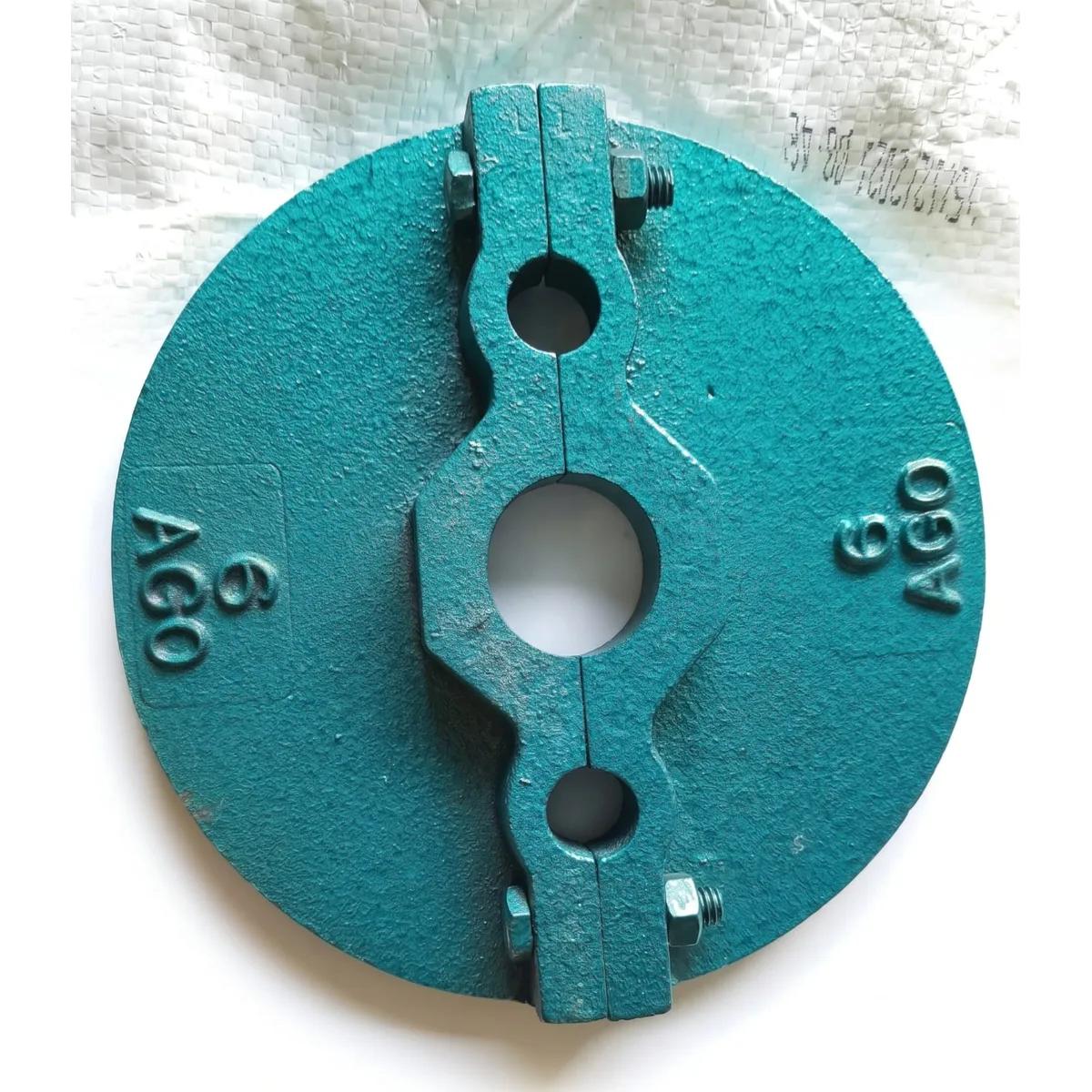
Fitting a borewell cap is a ten-minute job that gets done badly often enough to be worth writing down. Most of the caps we see returned as "cracked" were cracked by the installation, not by the casting — so the sequence below is really a list of ways to avoid breaking a part that was sound when it arrived.
You will need: an angle grinder or file, a vernier or tape, two spanners to fit the clamp bolts, and a straight edge.
1. Dress the casing cut
The cap seats on the casing rim. If that rim is uneven — and a casing cut on site with a cutting wheel usually is — the cap bears on two high points and bends between them under load.
Grind the cut flat all the way round. Check it with a straight edge laid across the mouth: it should touch everywhere, with no light under it. This is the step that gets skipped most often and it causes more cracked caps than any other.
2. Check the cap seats without rocking
Before any bolt is touched, place the cap on the dressed casing and press each edge in turn. It should not rock.
If it rocks, go back to step 1. Do not try to pull it flat with the clamp bolts — all that does is preload the plate in bending before the pump is even hung.
3. Verify the clamp bore against the column pipe
Measure the column pipe outside diameter and check it against the clamp bore. They should match: the clamp should close onto the pipe and grip, with the two halves not quite meeting.
If the halves bottom out against each other before gripping the pipe, the bore is oversize for the pipe and the clamp will never hold properly. If the clamp will not close far enough to grip, the bore is undersize. Either way, stop and get the right cap — this is the measurement covered in the borewell cap size guide.
4. Route the cable before lowering
Decide the cable path before the pump goes down, not after. The submersible cable passes through the notch cast into the clamp boss, and it must not be pinched between the clamp halves or between the cap and the casing.
A cable crushed under a clamp will not fail on the day. It fails months later, and recovering the pump to find out why costs many times what the cap did.
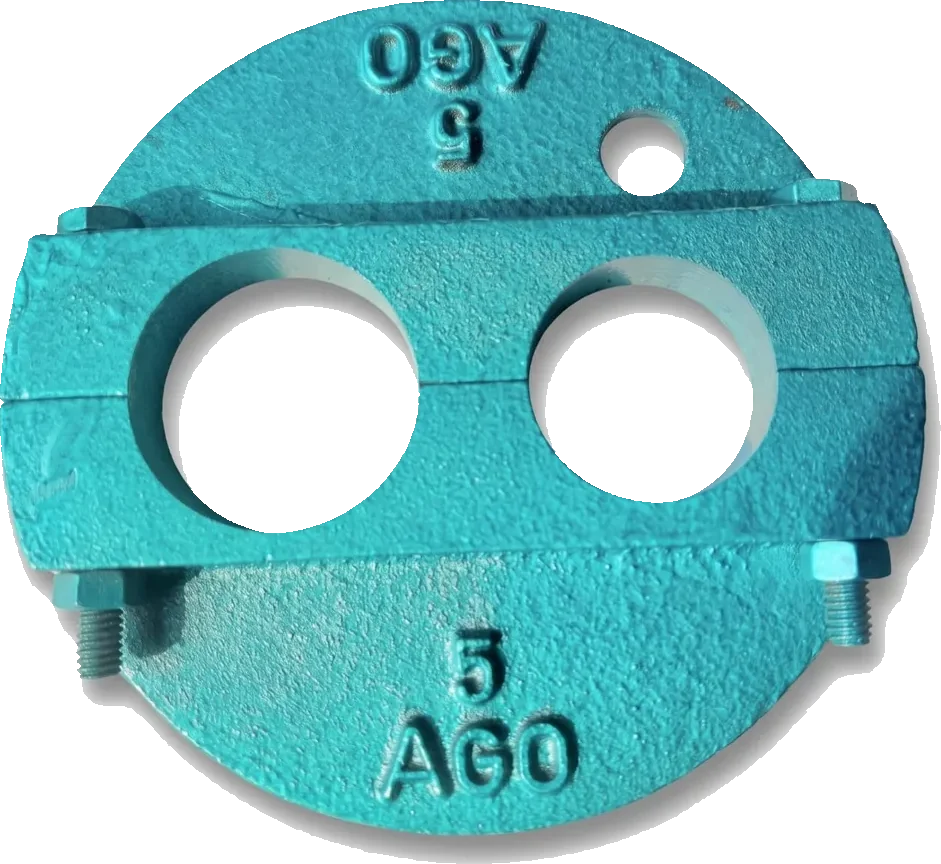
If the bore also carries a sounding tube or a dosing line, you need a twin-bore cap rather than a standard one — a second clamped opening, not a second cable through the same notch.
5. Lower the pump and take the load
Lower the assembly and let the cap take the hanging weight before tightening anything beyond hand tight. This lets the clamp find its natural position on the pipe rather than being forced to one.
6. Tighten the clamp bolts evenly
Alternate across the bolts, a little at a time, as you would tighten a flange. Tighten until the clamp grips the column pipe and stop there.
Beyond grip, extra torque stops clamping and starts splitting — it forces the two clamp halves apart and puts the boss into tension. Grey cast iron has no ductility to absorb that, so it cracks without warning.
If the clamp will not grip at sensible torque, the problem is the bore size, not the bolts. A longer spanner is not the answer.
7. Confirm the seat one last time
With the full load hanging, check round the cap that it is still bearing evenly on the casing and has not been pulled to one side by the cable or the pipe. Then paint or grease the bolt heads if the site is wet — bolts seize long before the casting degrades.
Common installation mistakes
| Mistake | Why it happens | What it causes |
|---|---|---|
| Casing not dressed | Skipped to save time | Cap bends between high points, cracks across the plate |
| Pulling a rocking cap flat with bolts | Looks like it works | Plate preloaded in bending before the pump is hung |
| Overtightening the clamp | "Tighter must be safer" | Boss split in hoop tension |
| Cable pinched under clamp | Routed after lowering | Insulation damage, failure months later |
| Wrong clamp bore accepted | Ordered without measuring the pipe | Clamp never grips, or never closes |
When to specify a through clamp bar
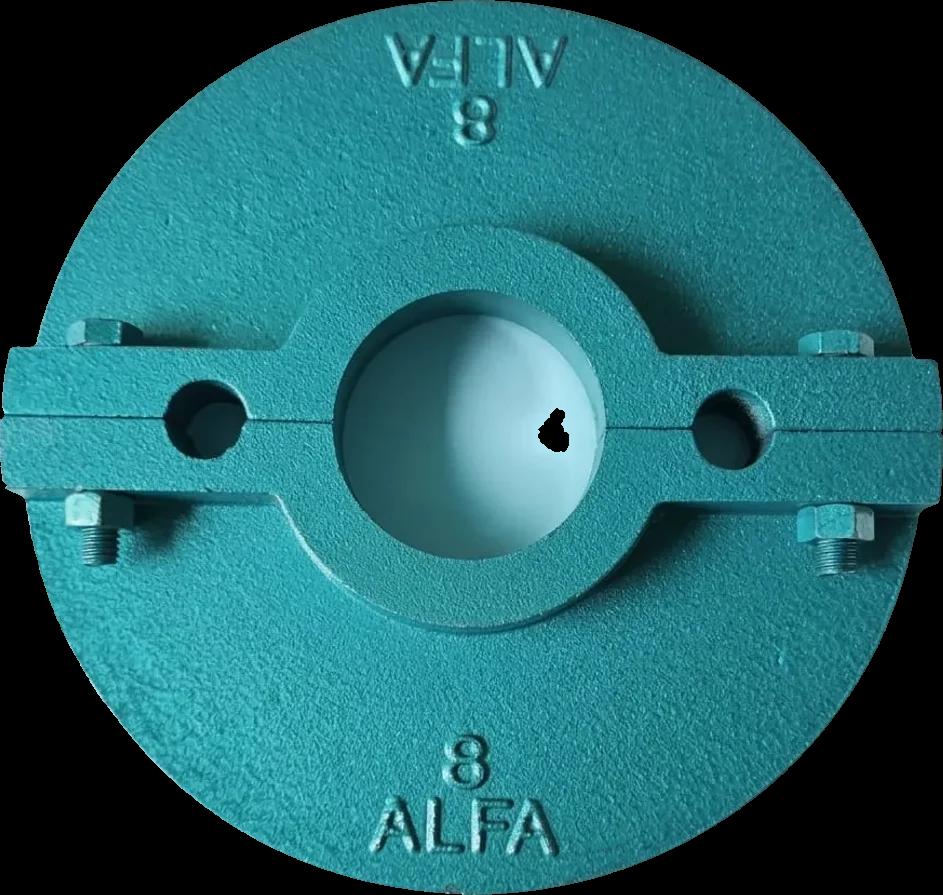
For deep settings and heavy pumps, a through clamp bar spreads the hanging load across the plate instead of concentrating it at the boss root. It is the more forgiving arrangement and it is what we recommend when the load is significant — see the ALFA 8" cap.
Frequently asked questions
How do you install a borewell cap?
Dress the casing cut flat, check the cap seats without rocking, verify the clamp bore matches the column pipe, route the cable through the notch, lower the pump and let the cap take the load, then tighten the clamp bolts alternately until the clamp grips.
Do I need to grind the borewell casing before fitting a cap?
Yes, if the cut is uneven — which it usually is when cut on site. A cap seated on two high points bends between them under the hanging load, and that is the most common cause of a cracked cap.
How tight should a borewell cap clamp be?
Tight enough to grip the column pipe, tightened alternately and evenly across the bolts. Additional torque past grip forces the clamp halves apart rather than gripping harder, which puts the boss into tension and splits it.
Where does the submersible cable go through a borewell cap?
Through a notch cast into the clamp boss, routed before the pump is lowered. It must not be pinched between the clamp halves or under the cap seat. If a sounding tube or dosing line also has to pass through, specify a twin-bore cap.
Can one person fit a borewell cap?
Fitting the cap itself, yes. Lowering the pump and column pipe is not a one-person job, and the cap should take the hanging load before the clamp is finally tightened.