7 min readArrow Industries
Borewell Cap Size Guide: How to Measure and Order the Right Cap
A borewell cap is sized by the bore casing diameter, not the pump. Here is how to measure the casing, the column pipe and the cable route before you order — with a size chart and the three mistakes that cause a cap to arrive and not fit.
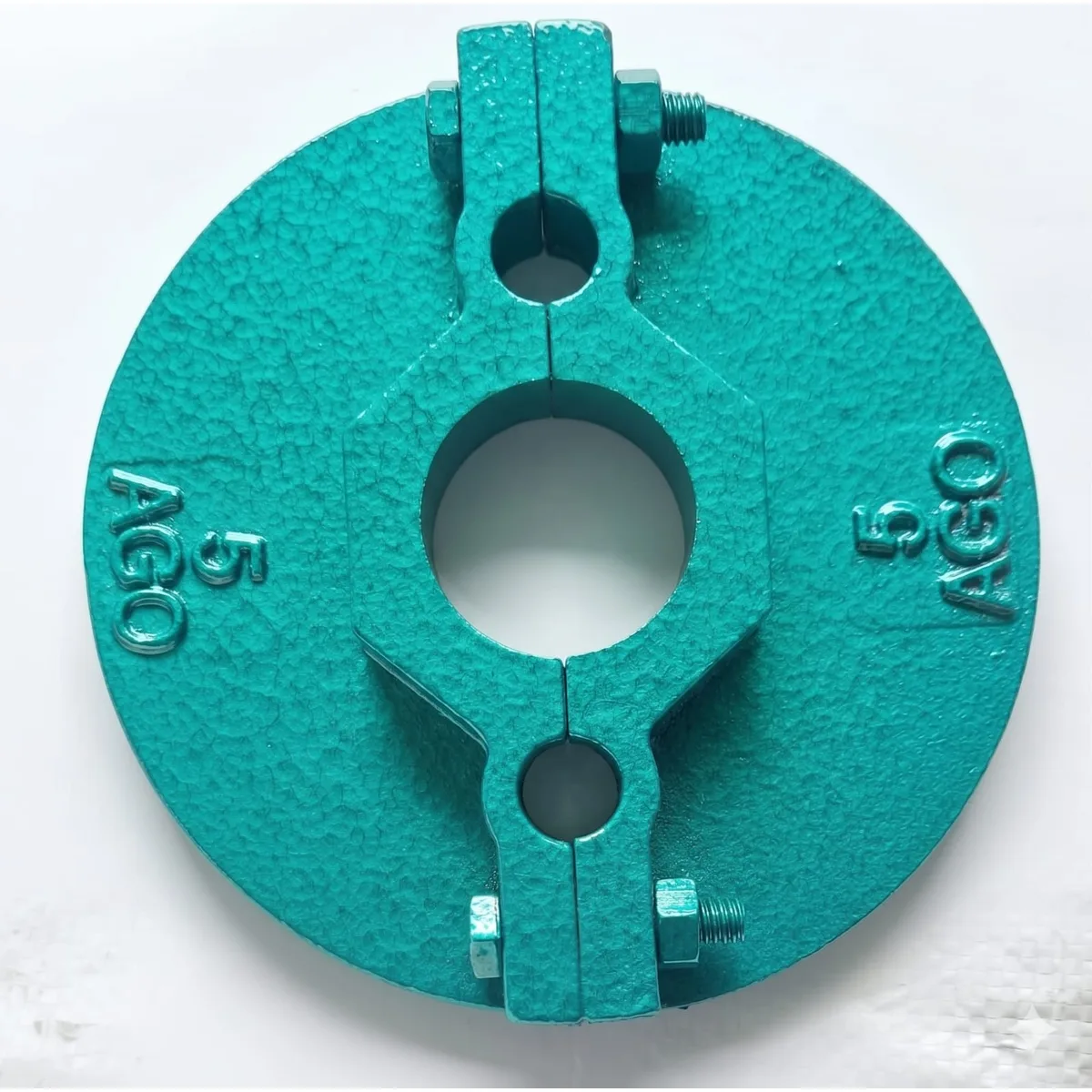
A borewell cap is sized by the outside diameter of the bore casing pipe, not by the pump and not by the column pipe. A 5" cap seats on a 5" casing. That single sentence prevents most of the wrong orders we see.
Three measurements decide which cap you need: the casing diameter, the column pipe outside diameter, and how the submersible cable leaves the bore. This guide covers all three, in the order a fitter takes them at the bore mouth.
Start with the casing, not the pump
The nominal size — 4", 5", 6", 7", 8", 9" — refers to the bore casing diameter. Fitters occasionally order against the pump rating, ask for a "1.5 HP cap", and receive something that will not seat.
Measure the outside diameter of the casing pipe at the bore mouth with a vernier or a tape around the circumference. Two things to watch:
- Cut unevenly? Measure at the lowest point of the cut. The cap seats on the lowest contact, not the highest.
- Casing out of round? Take the measurement twice, ninety degrees apart, and send us both figures. An oval casing needs the larger dimension.
Then measure the column pipe
The split clamp grips the outside diameter of the column pipe, which is a wholly separate measurement from the casing. This is the figure that gets forgotten.
A 5" bore commonly runs a 1¼" or 1½" column pipe, but that varies with pump discharge, delivery head and the depth the pump hangs at. Do not infer the column pipe from the bore size — measure it.
Size chart
| Bore casing | Common column pipe | Cap pattern | Typical use |
|---|---|---|---|
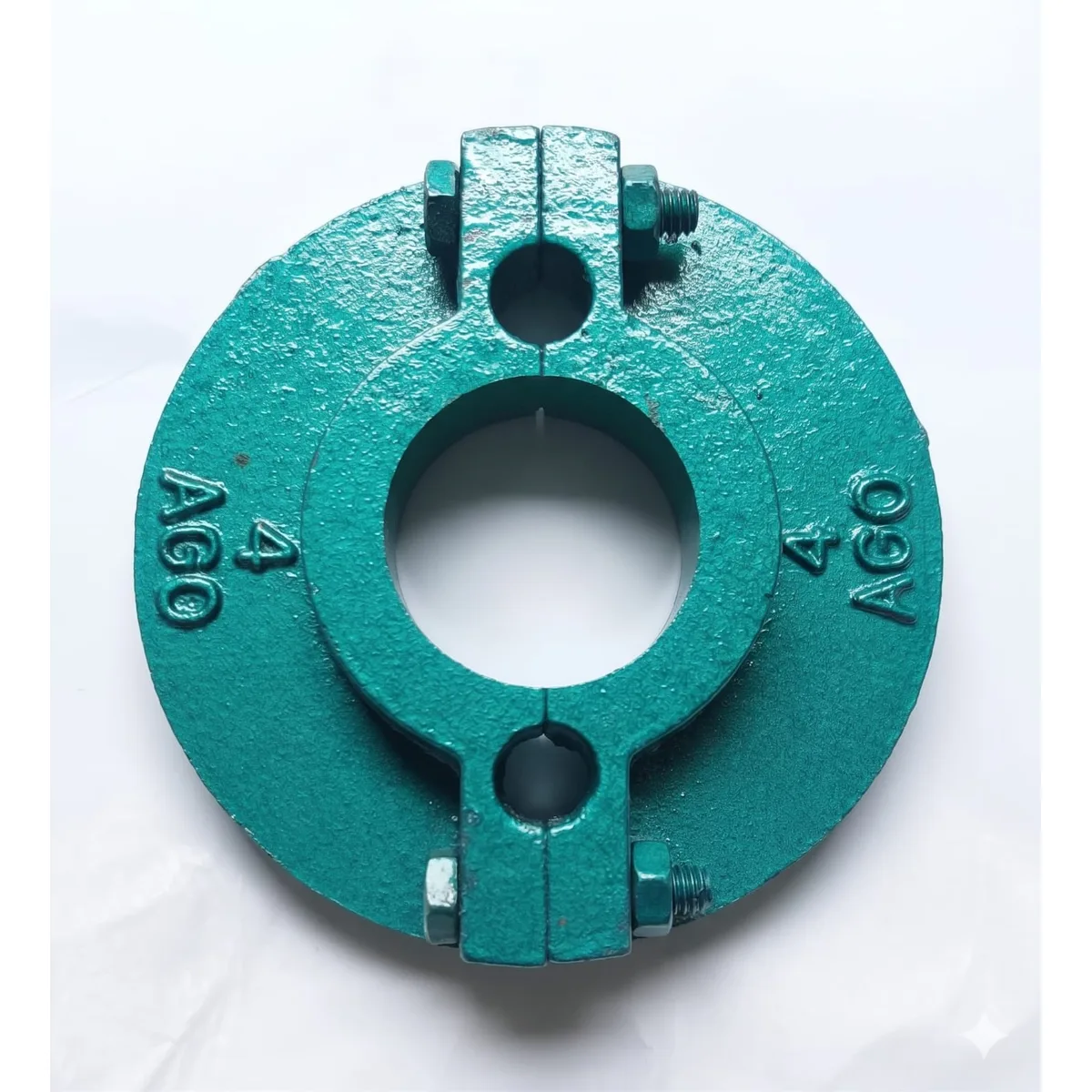
| 4" | 1" – 1¼" | AGO 4" with raised boss | Shallow domestic bores |
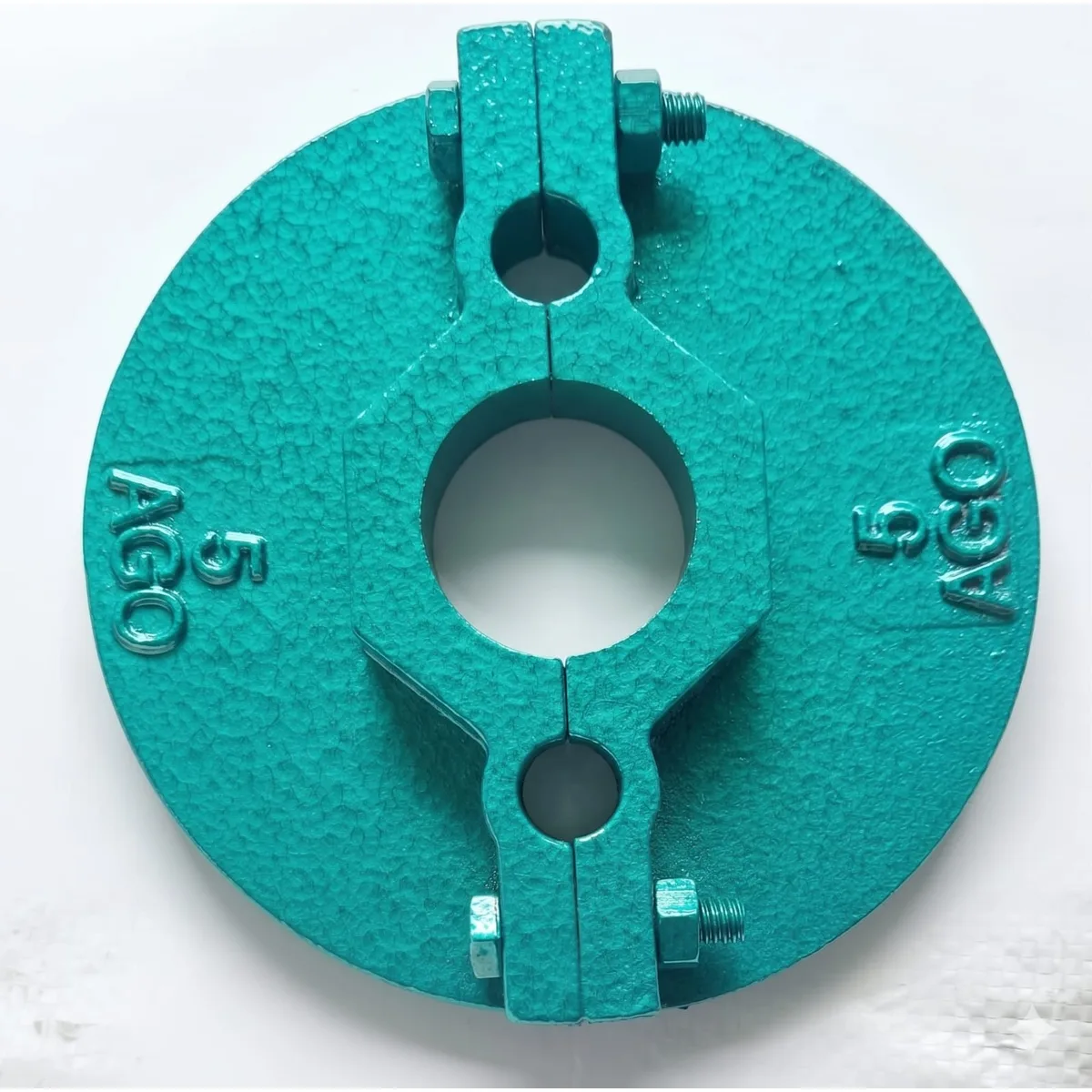
| 5" | 1¼" – 1½" | AGO 5" split clamp | The common domestic and agricultural size |
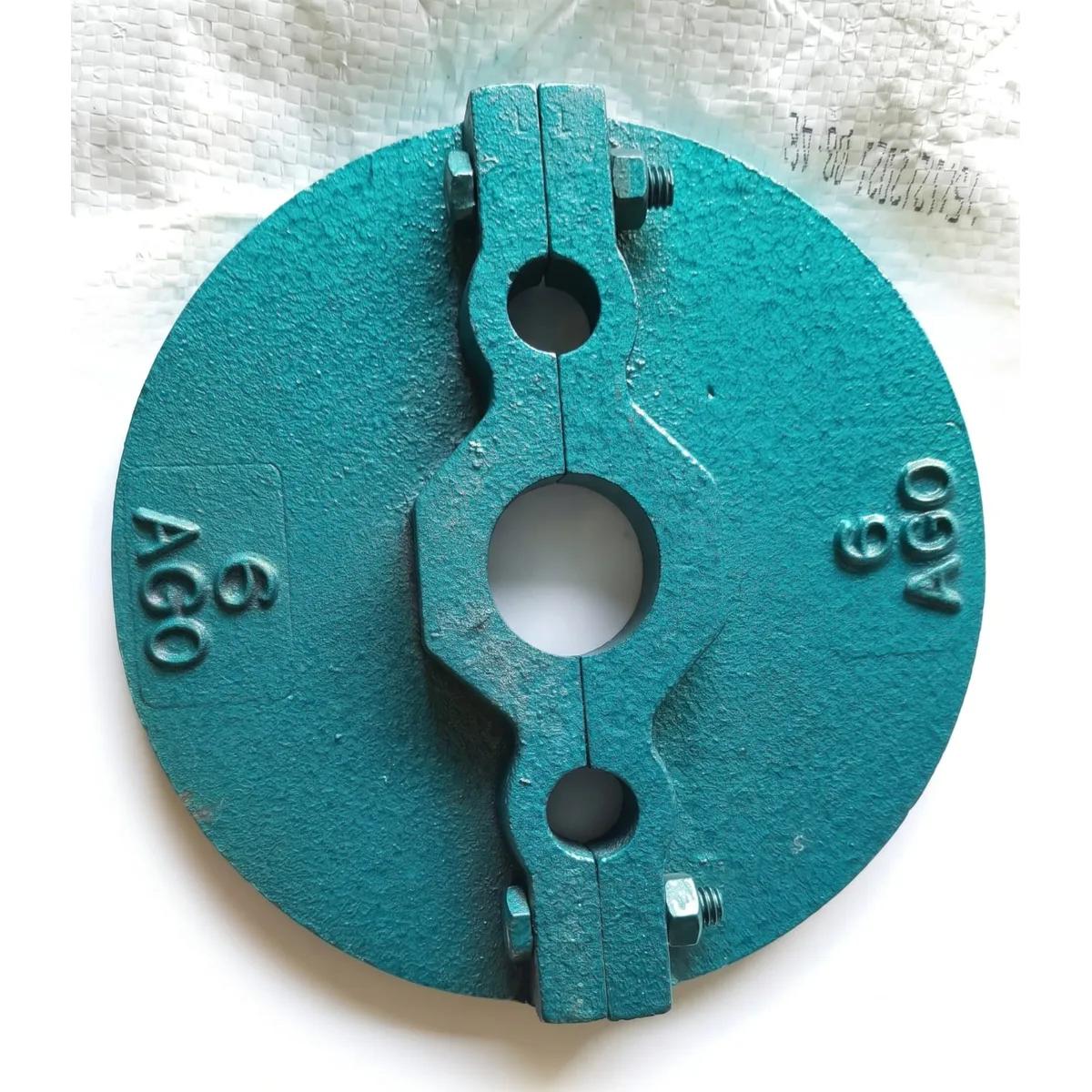
| 6" | 1½" – 2" | AGO 6" | Agricultural, deeper settings |
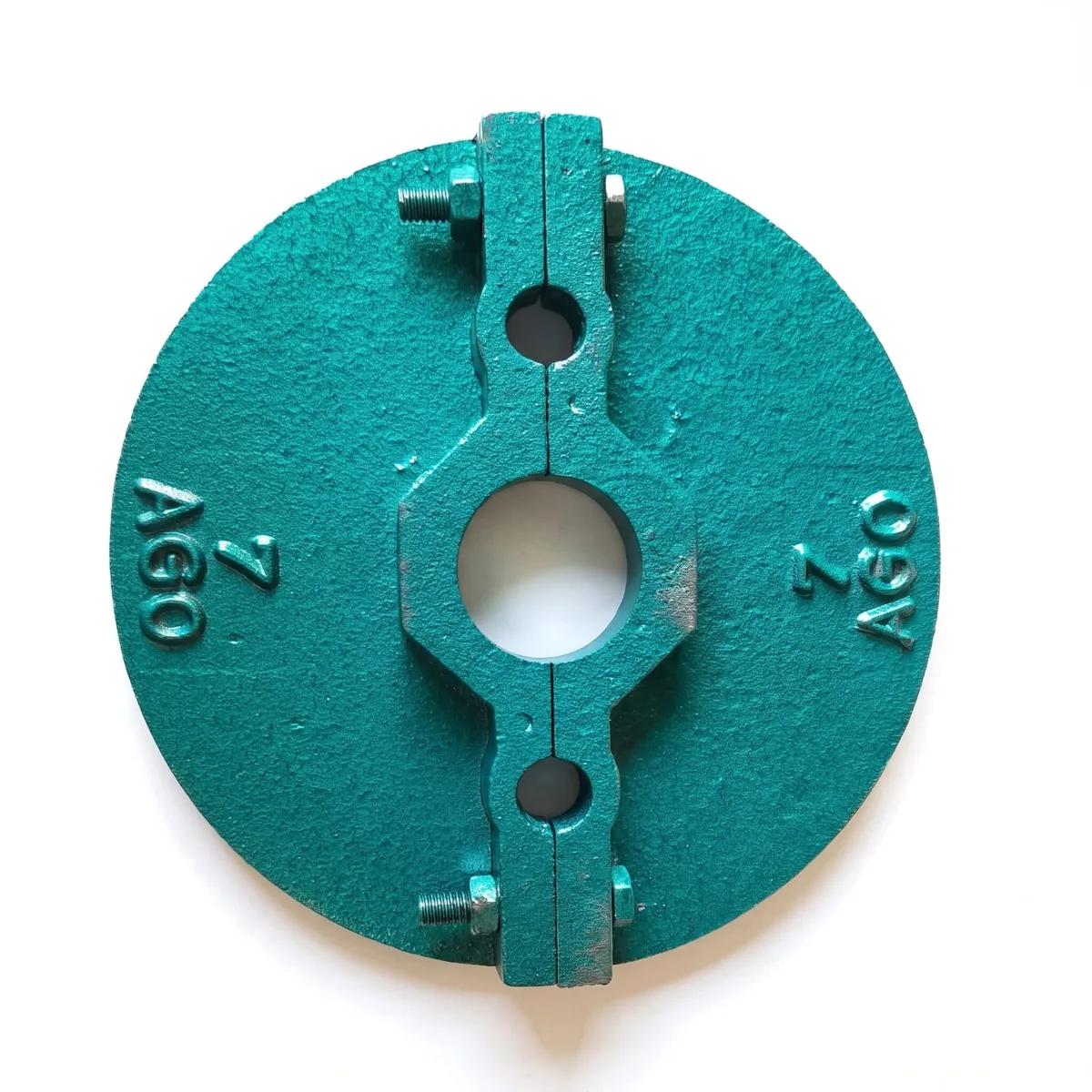
| 7" | 2" – 2½" | AGO 7" | Agricultural and light industrial |
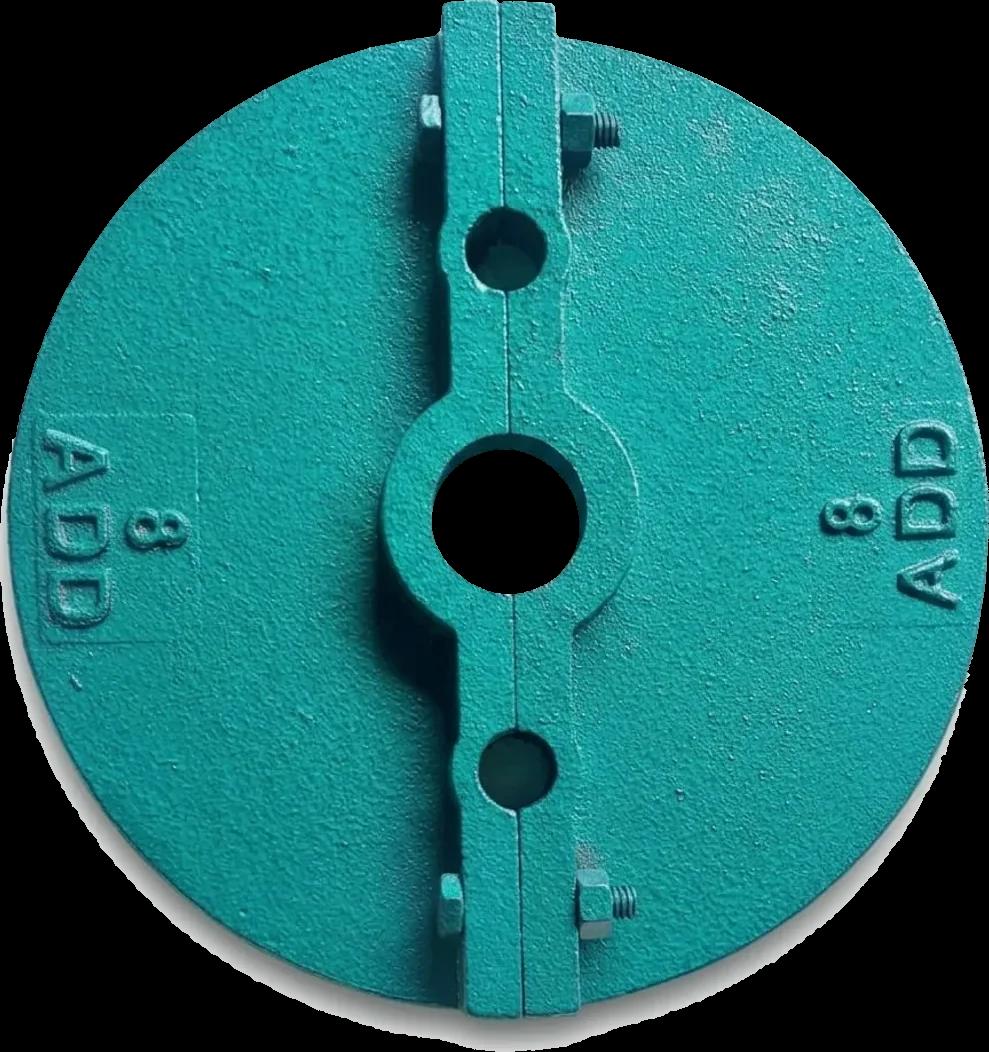
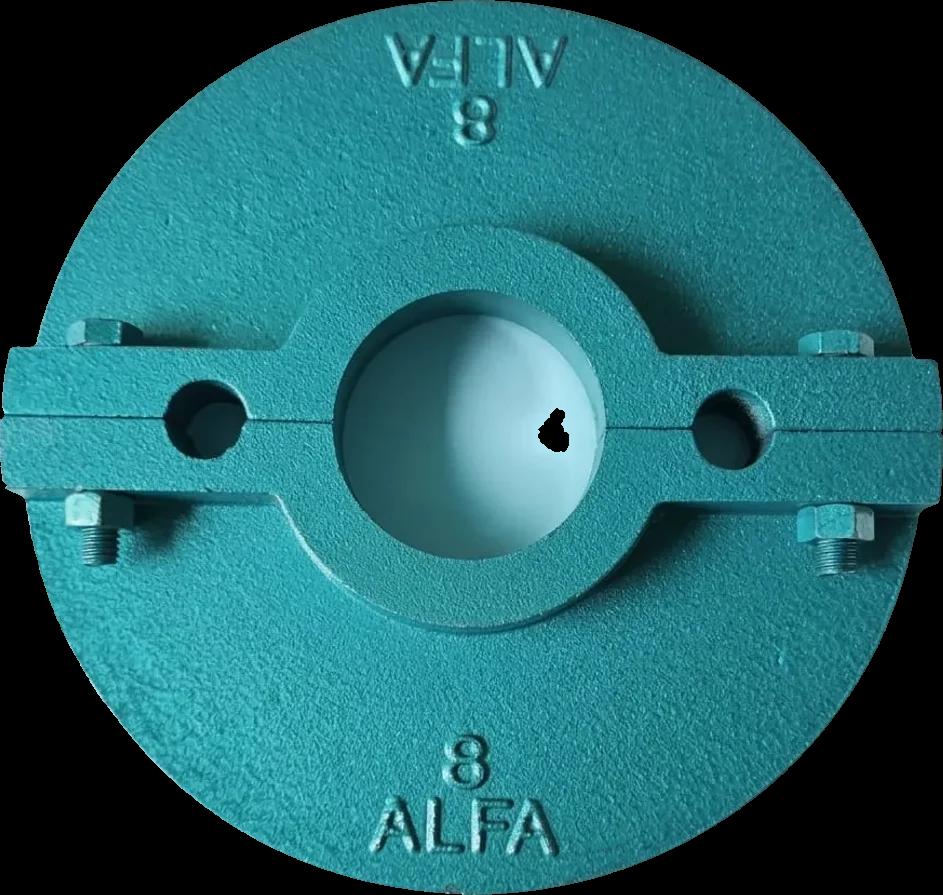
| 8" | 2½" – 3" | ADD 8", ALFA 8" through clamp bar | Industrial, heavy hanging loads |
| 9" | 3" and above | AGO 9" | Industrial and irrigation schemes |
Column pipe ranges above are what we see most often, not a rule. Confirm the actual pipe on site before ordering — the clamp bore is machined to the figure you give us.
Decide how the cable is routed
Three arrangements, in rising order of cost:
- Side notch — standard on all our caps. The submersible cable passes through a notch cast into the clamp boss. Suits most installations.
- Twin bore — a second clamped opening for armoured cable, a sounding tube or a dosing line. Specify this when the cable must not share the clamp with the column pipe. See the AGO twin-bore cap.
- Opposed notches — cable can exit either side, so the cap needs no rotating to face the control panel.
If the bore carries a sounding tube or a chlorine dosing line as well as the cable, say so when you enquire. Adding an opening after the cap is cast means a new pattern, not a modification.
Annular caps are measured differently
An annular ring cap is specified by two figures — the outer casing and the inner casing — written as 5×3, 6×3 and so on. These are used where a smaller casing is sleeved inside a larger one, common in rebored wells.
If your bore has been relined, you almost certainly need an annular cap rather than a plain one. The AGO annular ring cap covers 4×2 through 7×4.
Check the hanging load
The cap carries the whole static weight hanging below it: column pipe full of water, cable, and the pump itself. That load grows faster than people expect with depth, because the pipe is full.
For deep settings or heavy pumps, specify a through clamp bar rather than a cast boss. The bar spreads load across the plate instead of concentrating it at the boss root, which is where a cap cracks. The ALFA 8" cap uses this arrangement. We cover the failure mode in why borewell caps crack.
What to send when you enquire
Give us these five and we will confirm the pattern the same day:
- Bore casing outside diameter
- Column pipe outside diameter
- Cable type and whether it shares the clamp
- Approximate hanging depth and pump rating
- Quantity
Frequently asked questions
What size borewell cap do I need?
Measure the outside diameter of the bore casing pipe — that figure is the cap size. A 5" casing takes a 5" cap. The pump rating does not determine the cap size, and the column pipe is a separate measurement used for the clamp bore.
Is a borewell cap sized by the casing or by the column pipe?
By the casing. The cap seats on the casing, so the casing diameter sets the cap size. The column pipe outside diameter sets the clamp bore, which is machined separately.
What column pipe size goes with a 5 inch borewell cap?
Most 5" bores run a 1¼" or 1½" column pipe, but this depends on pump discharge and hanging depth. Measure the pipe rather than assuming it from the bore size.
What is an annular borewell cap?
An annular cap closes the gap between two concentric casings, used where a smaller casing has been sleeved inside a larger one. It is specified by both diameters, written as 5×3 or 6×3.
Can a borewell cap be made to a non-standard size?
Yes, against a pattern. Standard sizes from 4" to 9" are in stock patterns; anything outside that needs a new pattern, which carries a one-time cost and a longer lead time. Send the dimensions and we will quote.
Do I need a twin-bore cap?
Only if something other than the column pipe has to pass through the cap under its own clamp — armoured cable, a sounding tube or a dosing line. A standard side notch handles an ordinary submersible cable.