8 min readArrow Industries
FG 200 vs FG 260: Choosing a Cast Iron Grade Under IS 210
IS 210 grades grey iron by minimum tensile strength — FG 200 means 200 MPa, FG 260 means 260 MPa. What that actually changes for a borewell cap or a pump casing, and when paying for the higher grade is and is not worth it.
Indian Standard IS 210 classifies grey cast iron by minimum tensile strength in megapascals. FG 200 means a minimum of 200 MPa; FG 260 means a minimum of 260 MPa. The "FG" is flake graphite — the form the carbon takes in the microstructure, and the reason grey iron behaves the way it does.
That is the whole naming convention. What it does not tell you is which grade your part needs, which is the question worth answering.
What flake graphite does
Carbon in grey iron sits as graphite flakes through the metal. Those flakes behave mechanically like tiny internal cracks, which is why grey iron is weak in tension and shows almost no ductility — it does not stretch before it breaks.
The same flakes are why grey iron is genuinely good at other things:
- Damping. Flakes absorb vibration, which is why pump casings and machine bases are cast iron rather than fabricated steel.
- Machinability. Graphite acts as a chip breaker and a lubricant. Grey iron cuts cleanly and cheaply.
- Compressive strength. Several times its tensile strength. A part loaded in compression is well served.
- Castability. It fills thin sections and complex shapes with low shrinkage.
The two grades side by side
| FG 200 | FG 260 | |
|---|---|---|
| Minimum tensile strength | 200 MPa | 260 MPa |
| Typical hardness | Lower | Higher |
| Machinability | Easier | Good, tool wear higher |
| Damping | Higher | Slightly lower |
| Section sensitivity | More forgiving | Needs tighter process control |
| Relative cost | Lower | Higher |
Higher grade is not simply better. FG 260 is achieved with a different charge composition and tighter control of cooling, and it brings higher hardness — which is welcome for wear and unwelcome at the machining stage.
Which grade for which part
FG 200 suits parts where the load is moderate and distributed, and where damping and clean machining matter more than peak strength. Standard borewell caps in the smaller sizes, covers, brackets, base plates.
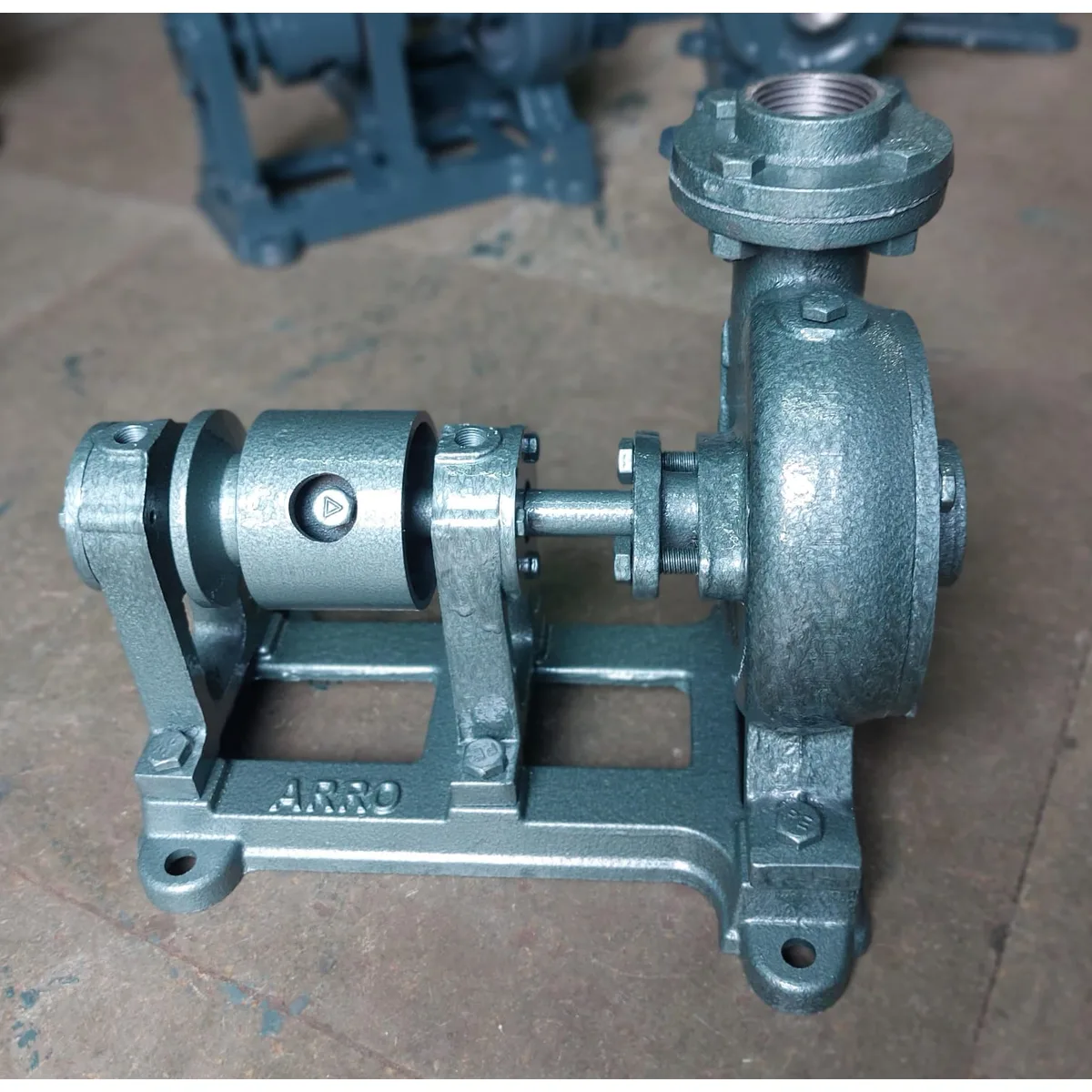
FG 260 suits parts carrying concentrated or cyclic load: larger caps with heavy hanging loads, pump casings under pressure, components where a section cannot be made thicker for clearance reasons.
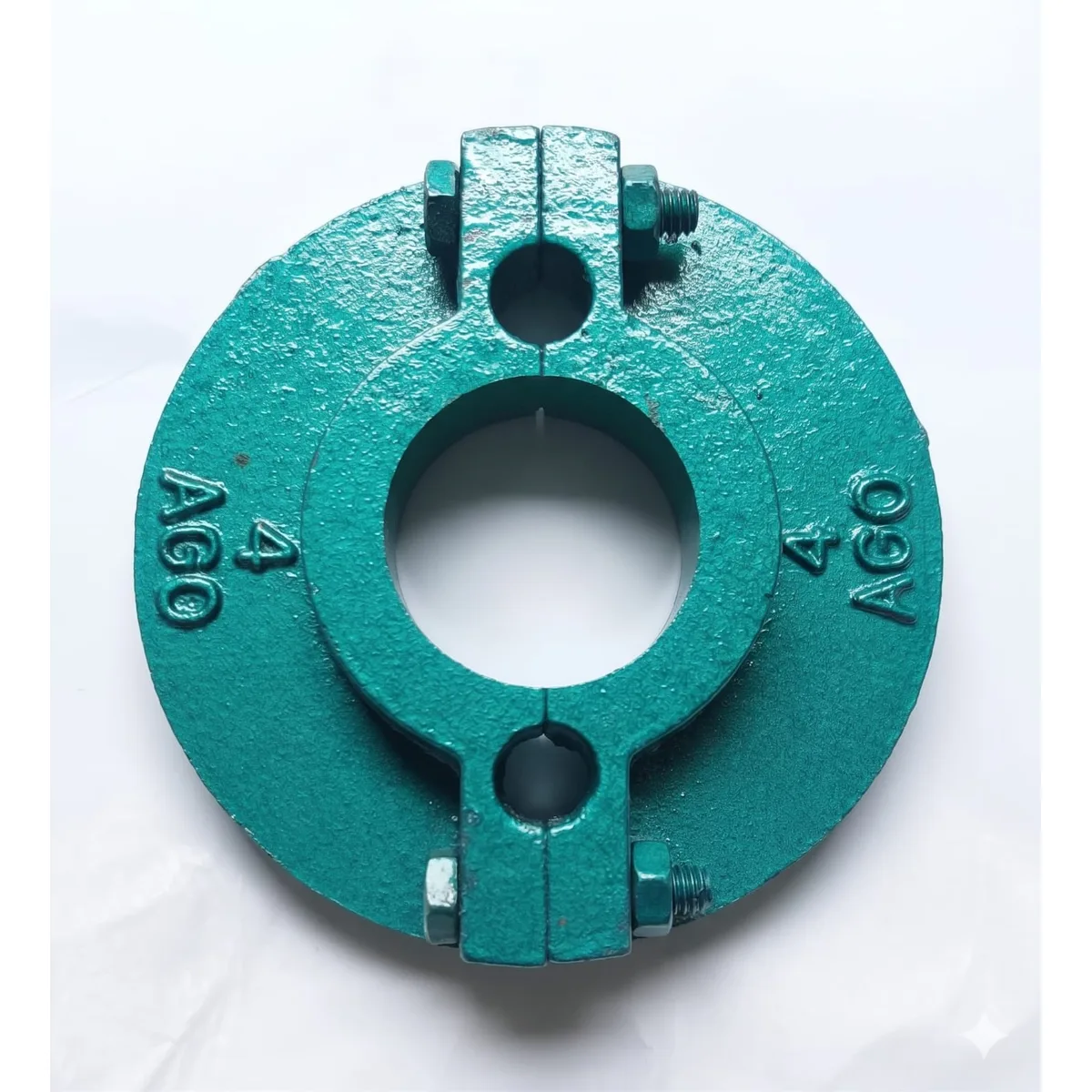
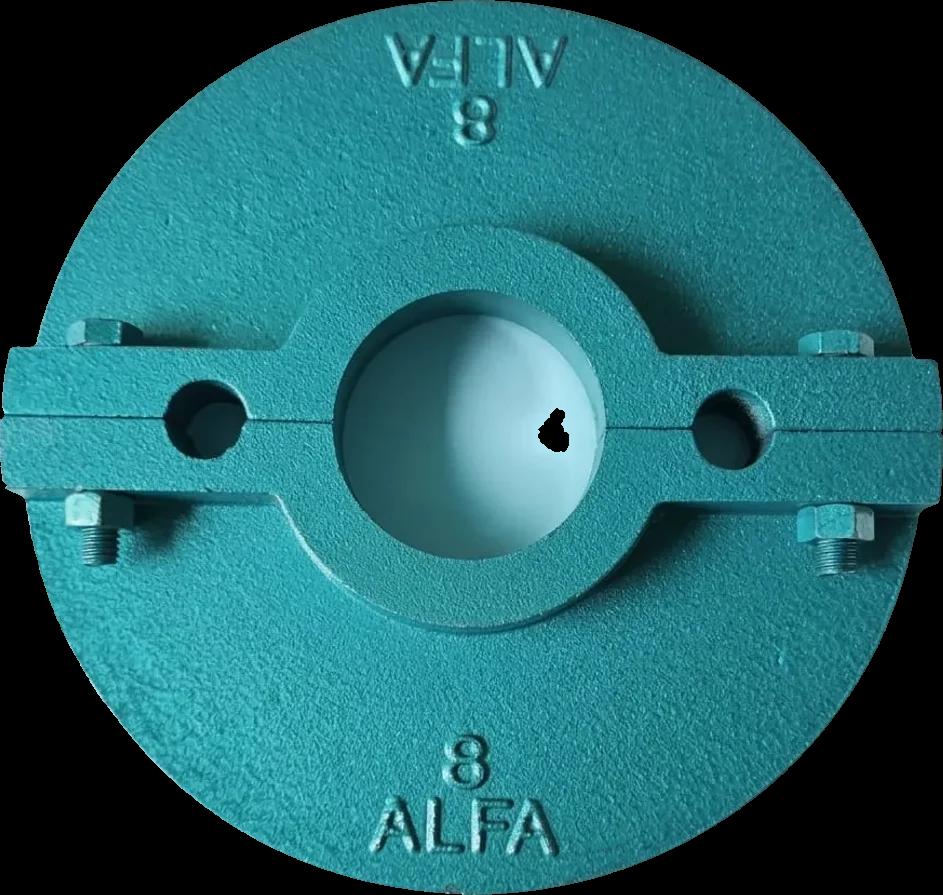
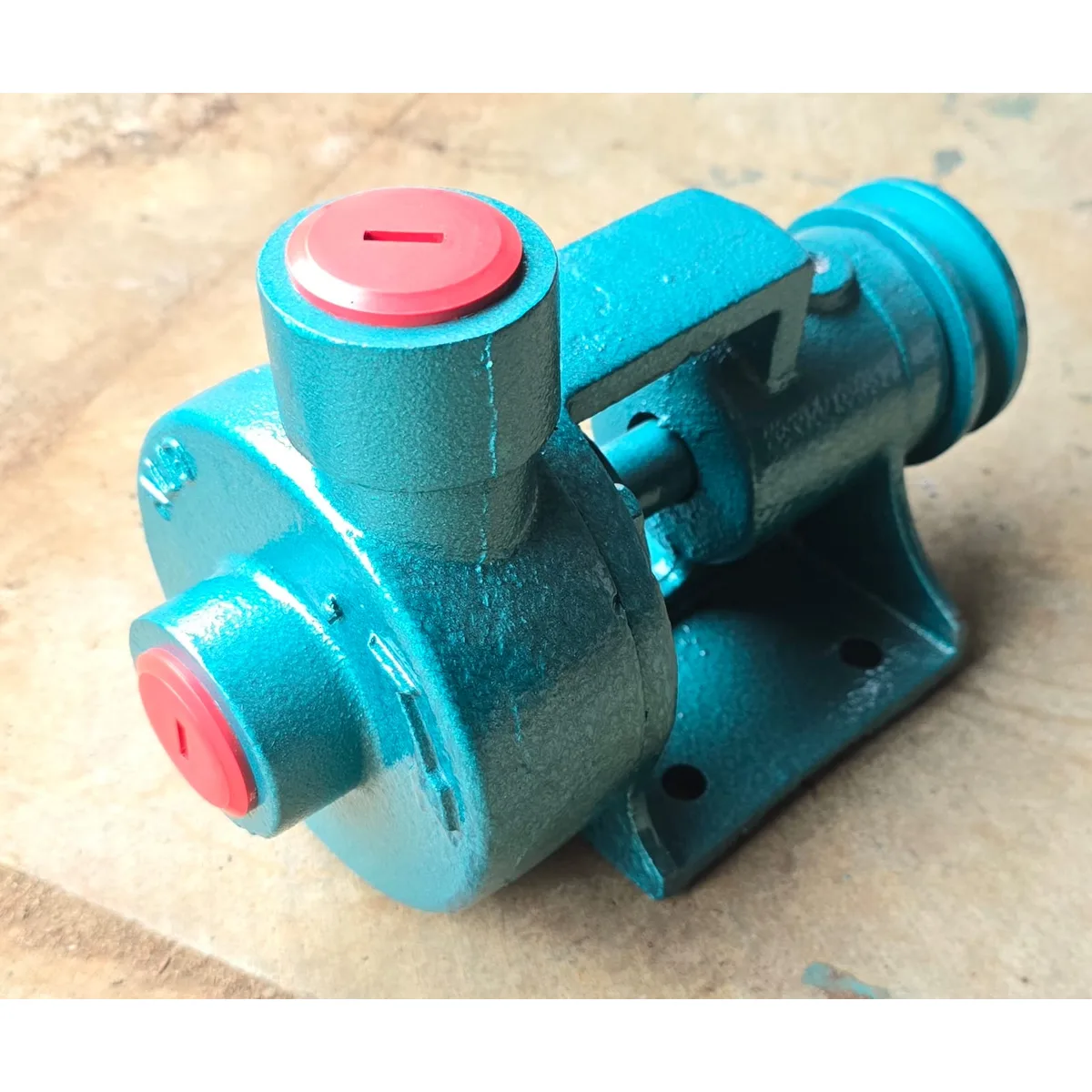
In our catalogue, lighter patterns such as the AGO 4" cap are poured in FG 200, while heavier-duty parts — the ALFA 8" cap with through clamp bar and the self-priming monoblock pump casing — are poured in FG 260. If a part is borderline, the question to ask is not "which is stronger" but "where does the load concentrate, and is that a section I can radius instead?"
Grade does not rescue bad geometry
This is the part that gets skipped. A sharp internal corner concentrates stress regardless of grade, and grey iron has no ductility to redistribute it. Moving from FG 200 to FG 260 raises the ceiling; it does not change where the crack will start.
For a borewell cap that means the fillet radius at the boss root and even section transitions do more for service life than the grade does. We work through this in why borewell caps crack.
Why not ductile iron, or steel?
Ductile (SG) iron has spheroidal rather than flake graphite, giving far higher tensile strength and real ductility. It costs more, needs magnesium treatment and tighter process control, and it damps vibration less well. For parts that must bend before they break it is the right answer; for a cap seating on a casing it is paying for a property the part does not use.
Fabricated steel is strong and ductile, but it corrodes faster in a wet bore environment, damps poorly, and a fabrication cannot produce the integral clamp geometry a cap needs in one piece. We compare the two directly in cast iron vs mild steel borewell caps.
What to ask a foundry
- Which grade is this pattern poured in, and why that one?
- Is the grade verified by test bar, and can I see the result?
- How is the section fed — where does this casting solidify last?
- What is the fillet radius at the load-bearing junctions?
A foundry that can answer the third and fourth questions is controlling the things that actually determine whether the part survives.
Frequently asked questions
What is the difference between FG 200 and FG 260?
Both are grey cast iron graded under IS 210 by minimum tensile strength: FG 200 is 200 MPa minimum, FG 260 is 260 MPa minimum. FG 260 is harder and stronger in tension; FG 200 machines more easily and damps vibration slightly better.
What does FG stand for in FG 200?
Flake graphite — the form the carbon takes in the microstructure. The flakes give grey iron its damping and machinability, and are also why it is weak in tension.
Is FG 260 always better than FG 200?
No. FG 260 costs more, is harder to machine and needs tighter process control. For parts under moderate, distributed load, FG 200 performs well and machines better. The grade should follow the load case, not the price list.
Which cast iron grade is used for borewell caps?
Both, depending on duty. Lighter caps are commonly poured in FG 200; larger caps carrying heavy hanging loads are poured in FG 260. Geometry — particularly the fillet radius at the clamp boss — affects service life more than the grade does.
Is grey cast iron suitable for pump casings?
Yes, and it is the standard choice. Its damping reduces vibration and noise, it machines cleanly for sealing faces, and it is strong in compression. Casings under higher pressure are poured in the higher grade.
Can grey cast iron be welded?
With nickel electrodes, careful preheat and slow cooling, yes — but the repaired region behaves differently from the parent metal. For load-bearing parts, replacement is the sound choice.